
About All ToursBoat ToursKauai Helicopter ToursSnorkel ToursCatamaran Cruise ToursZodiac Raft ToursCave ToursSunset Tours Directions Hours & Fees
Find Tours 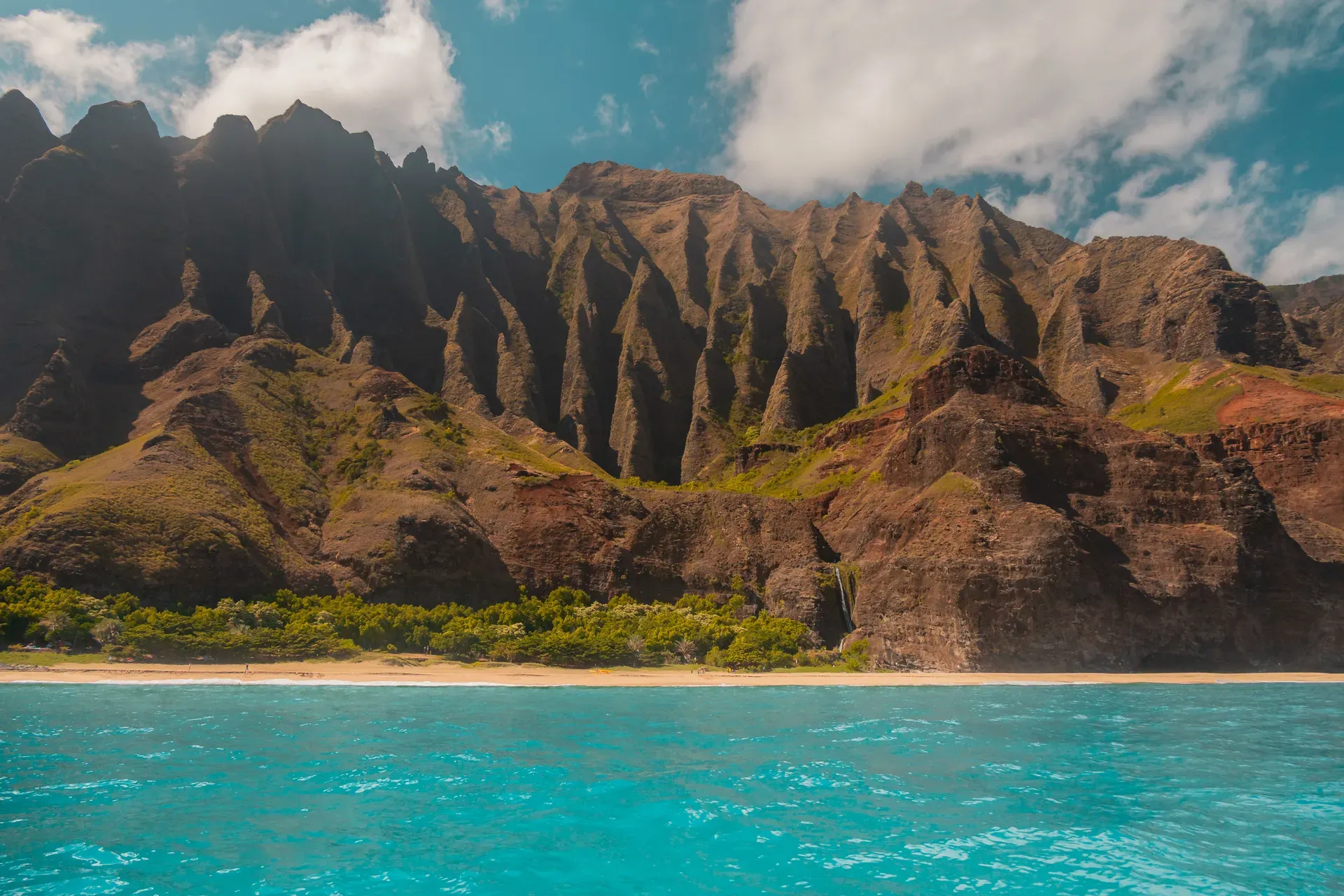
Non-residents pay $5 to enter the Na Pali Coast by land through Hāʻena State Park, which opens daily at 7:00 am. Hawaii residents with a valid state ID enter for free.
Nāpali Coast State Wilderness Park opens daily at 7:00am and closes at 7:45pm year-round. Access requires passing through Hāʻena State Park, which shortens its evening hours to 6:45pm starting the day after Labor Day. Flash floods frequently close the Kalalau Trail entirely between November and March.
| Day | Hours | Note |
|---|---|---|
| Monday–Sunday | 07:00–19:45 | Hāʻena State Park gateway closes at 18:45 during winter (starting the day after Labor Day). |
The park remains open on all national and state holidays, provided weather conditions allow safe access. Heavy rainfall and massive ocean swells from November to March trigger flash floods that force sudden, mandatory closures of the Kalalau Trail. Always verify trail status on the Hawaii DLNR website before driving to the trailhead.
Non-Hawaii residents pay $5 per person to enter Hāʻena State Park, the land gateway to the Na Pali Coast. Parking costs an additional $10 per vehicle, and you must secure all reservations in advance online. Hawaii residents enter the park without charge.
| Category | Price | Note |
|---|---|---|
| Non-resident Entry | $5 | Advance reservation required at gohaena.com |
| Child (3 and under) | Free | |
| Hawaii Resident Entry | Free | Valid Hawaii DL or ID required |
| Non-resident Parking | $10 | Per vehicle; advance reservation required |
| Resident Camping Permit | $25 | Per night per campsite; required past Hanakāpīʻai Valley |
| Non-resident Camping Permit | $35 | Per night per campsite; required past Hanakāpīʻai Valley |
Hawaii residents receive free daily entry to Hāʻena State Park with a valid state ID.
Planning your visit to Na Pali Coast? Find tours with free cancellation and skip-the-line options.
View All ToursVisit between June and August when ocean swells settle and boats can safely enter the sea caves. Winter brings massive swells and flash floods that frequently close the Kalalau Trail. Because daily trail access caps at 900 people and trailhead parking fills immediately at 7:00 am, secure your Hāʻena State Park shuttle reservations weeks in advance.
| Period | Crowd Level | Recommendation |
|---|---|---|
| Early morning (07:00–09:00) | High | Catch the first Hāʻena State Park shuttle at 7:00 am to guarantee entry among the 900 daily visitors permitted on the Kalalau Trail. |
| Mid-morning (09:00–12:00) | High | Five-hour catamaran tours depart during this window, allowing passengers to view the 4,000-foot basalt cliffs and snorkel alongside green sea turtles. |
| Midday (12:00–15:00) | High | The sun reflects intensely off the Pacific water, requiring passengers on open boats to wear rash guards and wide-brimmed hats. |
| Late afternoon (15:00–17:00) | Moderate | Families with children can safely swim in the lifeguard-protected tide pools at Keʻe Beach while the main hiking crowds depart. |
| Evening (17:00–19:45) | Low | Exit the wilderness area before Hāʻena State Park locks its gates at 7:45 pm in the summer, or 6:45 pm during winter months. |
Visits to the Na Pali Coast last anywhere from a one-hour helicopter flight to a five-night backpacking expedition.
No roads penetrate these 4,000-foot basalt cliffs. Catamaran tours typically occupy five hours—assuming winter swells do not cancel your departure—while hiking the full 22-mile Kalalau Trail requires multiple days, treating your own stream water, and securing an advance state permit.
Schedule your boat or helicopter tour for the first day of your vacation. Heavy rainfall and large winter swells force operators to cancel trips frequently. A buffer gives you time to reschedule before flying home.
Swallow Dramamine or apply a prescription scopolamine patch before leaving the dock. The boat ride from Port Allen navigates an hour of choppy, open ocean each way. Pack electronics in a dry bag to survive the heavy sea spray.
Leave the flip-flops and Tevas at the hotel. The Kalalau Trail features slick, muddy terrain requiring closed-toe hiking shoes with aggressive traction. Scrub all soil off your boots and spray them with 70% rubbing alcohol to avoid spreading the Rapid ʻŌhiʻa Death fungus.
Secure a $10 non-resident vehicle reservation or shuttle ticket at www.gohaena.com before driving out. Parking at Keʻe Beach hits capacity immediately. Hawaii residents bypass the entry fee by showing a valid state ID.
Treat all trail freshwater using a filter, purification tablets, or a rolling boil. Drinking directly from the streams exposes hikers to leptospirosis. Carry at least two liters of water per person into the roadless wilderness park.
Non-residents pay $5 per person to enter Hāʻena State Park, the gateway to the coast. Children three and under enter free. Hawaii residents get in free with a valid state ID, but non-residents must also pay $10 per vehicle for a parking reservation.
Nāpali Coast State Wilderness Park opens daily from 7:00 am to 7:45 pm. Hāʻena State Park follows similar summer hours starting April 1st. Winter hours begin the day after Labor Day, closing the gates an hour earlier at 6:45 pm.
Hiking past Hanakāpīʻai Valley requires a valid camping permit. These cost $25 per night for Hawaii residents and $35 per night for non-residents. The state caps online reservations at 900 per day and limits total stays to five nights.
You must secure reservations for park entry, parking, or shuttles ahead of time at www.gohaena.com. Parking at the Keʻe Beach trailhead fills up extremely fast. Booking a spot on the Hāʻena State Park shuttle guarantees your access without needing a vehicle pass.
Commercial boat operators cannot legally drop off or pick up passengers at Kalalau or Miloliʻi. Visitors must access these camping areas on foot with an authorized permit. Regular sightseeing boat tours cost between $150 and $400 per person.
April through October brings the calmest ocean swells and clearest skies for boat access into the sea caves. November to March triggers heavy rainfall and large waves. These winter conditions cause rapid flash floods that frequently force closures on the Kalalau Trail.
Launching or landing a drone from State Park property violates state law. Flying along the 4,000-foot basalt cliffs remains legal only if you launch from outside park boundaries and follow FAA regulations. Commercial filming requires a separate Special Use Permit.
Browse verified tours with free cancellation and instant confirmation.
Find Tours